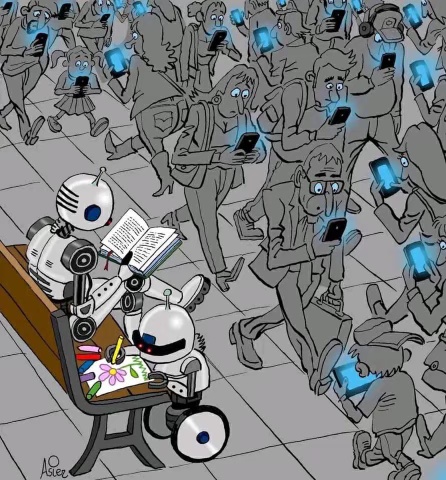
The theory of Free Will is the cognitive ability to choose between different possible courses of action, unimpeded.
The idea of Free Will is closely linked to the concepts and behaviours of praise and culpability which apply only to actions that are freely chosen. Without impediment.
Whether free will exists in humans is one of longest running debates of philosophy and religion.
In science, so far, there is no evidence of free will in human intelligence. Cognitive neuroscientists have not found any neurons that are unimpeded and can support the theory of free will (Sapolsky).
If free will exists at all then it’s not located in the brain because all neuronal activity is deeply determined. If this is the case, and given that AI is trained by human brains using human thinking, then there is no evidence that AI could have free will, the ability to choose between different possible courses of action, unimpeded.
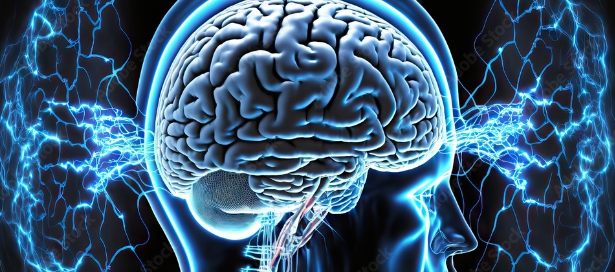
What are some of the impediments that restrict the possibility of ‘free will’; that go to determine the way the human brain directs human behaviour?
Impediments
These events may range from seconds before (neurological) to thousands of years before such as the genetics that hardwired our individual brain. For example:
1. Neurological – brain trauma, ageing, disease, pharmatoxicity in the neuronal structure.
2. Hormonal – chemical balance, stress-related adrenalin and other moods and fluctuations.
3. Cultural – Family, generational and society history. Urban or nomadic or other cultures. Mythologies and politics.
4. Genetic – Conception, gestation events, adolescence, genetic history, individual genomic profile.
5. Environmental – affluence/poverty, abuse (cognitive, sexual, violence), education, safe neighbourhoods, geography, wars, famines, plagues.
6. Evolutionary – from big bang evolutionary physics to planetary biology, the lizard brain, the mammalian brain, AI.
7. Neuroplasticity – the constant moment-by-moment learning and rewiring of the brain.
(26 minute video)
Here’s a great discussion between Robert Sapolsky and Alan Alda on “free will” …
 Pope Luciani School of Catholic Science Thinking